Can an Educated Wife Still Claim Maintenance? Landmark Court Judgments Every Husband and Wife Must Know
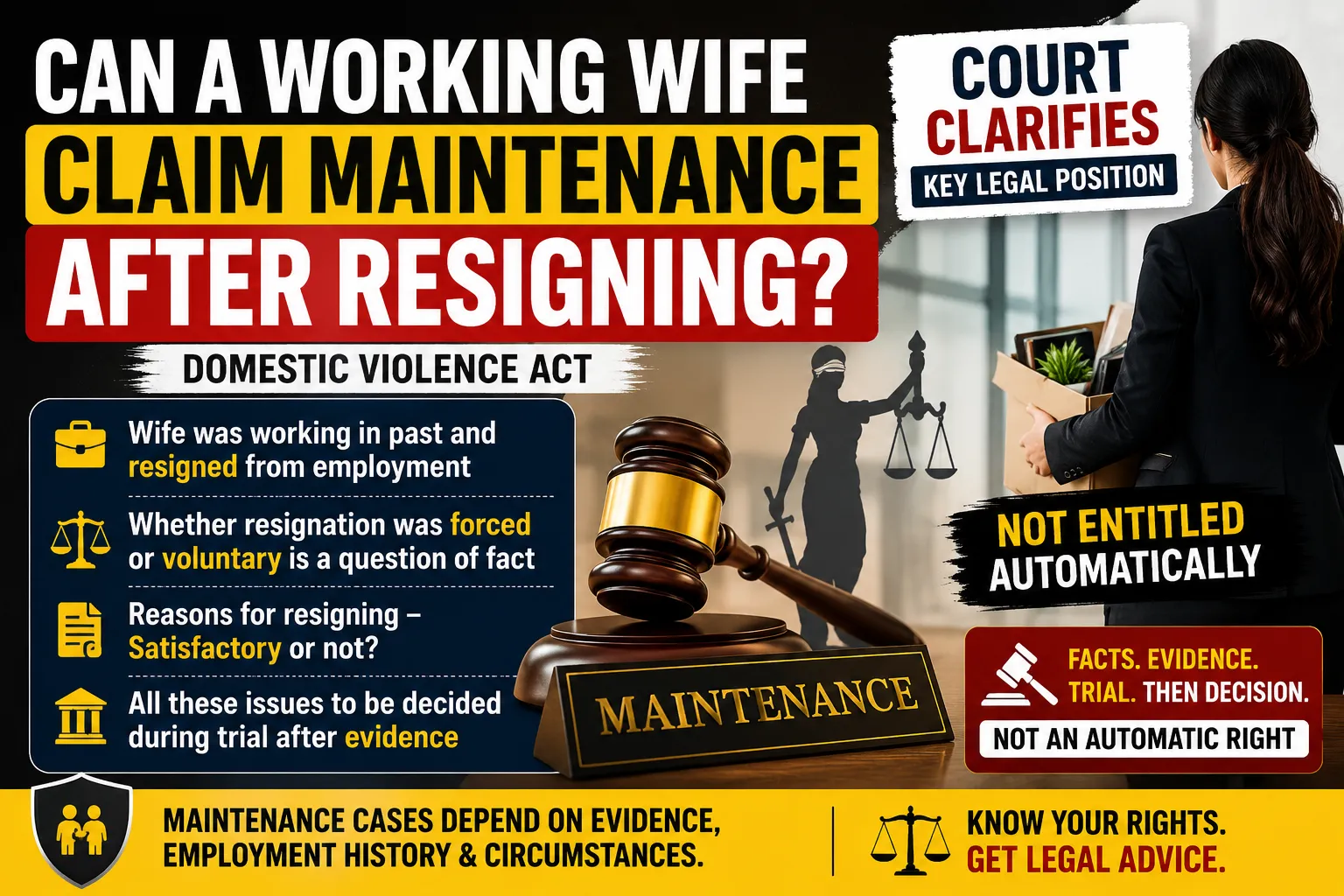
Table of contents
Open Table of contents
Introduction
Maintenance disputes under Section 125 CrPC, the Protection of Women from Domestic Violence Act, and matrimonial laws have become one of the most contested areas of family litigation in India. Courts today are increasingly examining whether a spouse is genuinely unable to maintain herself or is deliberately remaining unemployed despite qualifications and earning capacity.
For parties involved in divorce and maintenance litigation, understanding the evolving judicial trend is extremely important. Many litigants now consult an experienced divorce lawyer in Kolkata to understand how courts assess employment history, educational qualifications, and earning potential.
Can an Educated Wife Be Denied Maintenance?
Indian courts have repeatedly clarified that mere educational qualification alone is not sufficient to deny maintenance. However, where evidence shows that a qualified spouse intentionally avoids employment despite capability, courts may reduce or deny maintenance.
This delicate balance has created a highly evidence-driven approach in matrimonial litigation.
Landmark Judgments on Earning Capacity
1. Mamta Jaiswal v. Rajesh Jaiswal
The Madhya Pradesh High Court observed that highly qualified spouses capable of earning should not remain idle merely to claim maintenance. The Court criticised the tendency to use maintenance as a “dole” system instead of encouraging self-sufficiency.
2. Damanreet Kaur v. Indermet Juneja
The Court held that if a wife resigned from employment, the reason (voluntary or forced) must be examined. Maintenance cannot be granted mechanically without looking at the causes for unemployment.
3. Vijay Kumar v. Harsh Lata Aggarwal
The Delhi High Court held that where both spouses possess similar qualifications and comparable income, there may be no justification for awarding interim maintenance to the wife.
4. Bhushan Kumar Meen v. Mansi Meen
The Supreme Court reduced the maintenance amount because the wife possessed sufficient educational qualifications and earning capacity to maintain herself in the future.
5. Omar Abdullah v. Payal Abdullah
The Delhi High Court emphasized that before awarding maintenance, the Court must examine if the wife is genuinely unable to maintain herself and if neglect by the husband is established.
Supreme Court Guidelines: Rajnesh v. Neha
The landmark judgment in Rajnesh v. Neha transformed maintenance litigation by introducing uniform disclosure guidelines regarding income, assets, liabilities, and expenses. The Court emphasized that determination must consider:
- Actual earning capacity vs. potential.
- Standard of living during the marriage.
- Financial disclosures and reasonable needs.
Why Strategy Matters in Maintenance Litigation
Modern matrimonial litigation is no longer decided merely on allegations. Courts now examine:
- Employment history and salary slips.
- Income Tax Returns (ITRs) and bank statements.
- Educational qualifications and standard of living.
Because of this, parties often seek assistance from a qualified family lawyer in Kolkata at an early stage to prepare financial disclosures and litigation strategy properly. Strategic presentation of evidence often determines whether maintenance is granted, reduced, or rejected.
Advocate Prithwish Ganguli
House # 73, near Tank #10, (Behind Matri Sadan Hospital),
EE Block, Sector II, Bidhannagar (Salt Lake), Kolkata 700091
M.: 99030 16246